A local-first AI platform built end-to-end from scratch — chat, retrieval-augmented generation, federated search, multi-agent orchestration, event-driven ingestion, role-based access control, and full observability, all running on a self-hosted Kubernetes cluster. This page is a real, screenshot-driven tour of the actual UI.
A real system diagram, rendered live in your browser (not a static image) — the actual shape of how a request moves from the browser down to the local model and back.
flowchart TD
WEB["Next.js Frontend"] --> ING["Kubernetes Ingress"]
ING --> AUTH
subgraph API["Backend API — four-layer bounded contexts"]
AUTH["Identity and Auth
JWT, RBAC: owner / admin / member / viewer"]
CHAT["Conversation
streaming chat"]
RAGC["RAG
upload, chunk, embed, hybrid retrieve, rerank, cite"]
SEARCH["Federated Search
internal documents + live web, fused"]
AGENT["Agent Orchestration
ReAct loop, Supervisor + specialist agents"]
GATEWAY["Model Gateway
provider router, circuit breaker"]
end
AUTH --> CHAT & RAGC & SEARCH & AGENT
CHAT --> GATEWAY
RAGC --> GATEWAY
SEARCH --> GATEWAY
AGENT --> GATEWAY
GATEWAY -->|local, $0| OLLAMA["Ollama
local model"]
GATEWAY -.->|optional fallback| CLOUD["Cloud providers
optional"]
subgraph Guard["Security Layer"]
INJ["Prompt-Injection Detection
neutralizes untrusted tool output"]
PII["PII Redaction
applied to every log line"]
end
AGENT <--> INJ
subgraph Ingestion["Event-Driven Ingestion"]
OUTBOX["Outbox"] --> KAFKA["Kafka"] --> WORKER["Worker
extract, chunk, embed, index"]
end
RAGC --> OUTBOX
subgraph Data["Data Layer"]
PG[("PostgreSQL")]
VEC[("Vector Store")]
end
AUTH --> PG
CHAT --> PG
AGENT --> PG
RAGC --> VEC
WORKER --> VEC
WORKER --> PG
subgraph Infra["Infrastructure"]
K8S["Kubernetes / Helm"]
OBS["Prometheus + Grafana"]
end
K8S -.->|deploys| API
K8S -.->|deploys| Ingestion
OBS -.->|scrapes| API
A high-level look at what's actually running behind these screens — a real system, not a demo shim.
Every chat/RAG/agent response is generated by a locally-hosted open model (Ollama), not a cloud API — no data leaves the machine, and there's a multi-provider router with automatic fallback if a paid provider is ever added.
A companion process on your own machine connects a real project over an outbound WebSocket. Path containment and the blocked-command list are enforced there, not server-side, so the agent can never reach outside the folder you connected — and every write and every shell command needs an explicit human approval first.
Documents are chunked, embedded, and indexed in a vector store, then retrieved via a fusion of vector similarity and lexical (BM25) search, re-ranked by a cross-encoder, and cited claim-by-claim in the final answer — never an unverified summary.
The same retrieval pipeline is fused with live, self-hosted web search, so one answer can cite both a private document and a real web source side by side.
A ReAct-style agent loop calls tools (retrieval, calculation, web search) as many times as a goal needs, with every reasoning step persisted and visible — including a Supervisor mode that delegates subtasks to specialist agents.
Document processing runs as an asynchronous saga over Kafka (outbox pattern, idempotent consumers, dead-letter queue on failure) — uploads return instantly and index in the background.
Organizations can have multiple users with different roles (owner, admin, member, viewer). Role-gated actions are enforced server-side with real 403s — demonstrated below with real API responses, not a mockup.
Deterministic prompt-injection detection neutralizes suspicious instructions found in retrieved content before they ever reach the model, and PII is redacted from logs automatically.
Request latency, LLM cost, and agent step counts are scraped into Prometheus and visualized in Grafana. The whole stack deploys via Helm to a Kubernetes cluster, not just Docker Compose.
Every screenshot below is a real, unedited capture of the app actually running — real login, real document, real model responses, real agent trace.
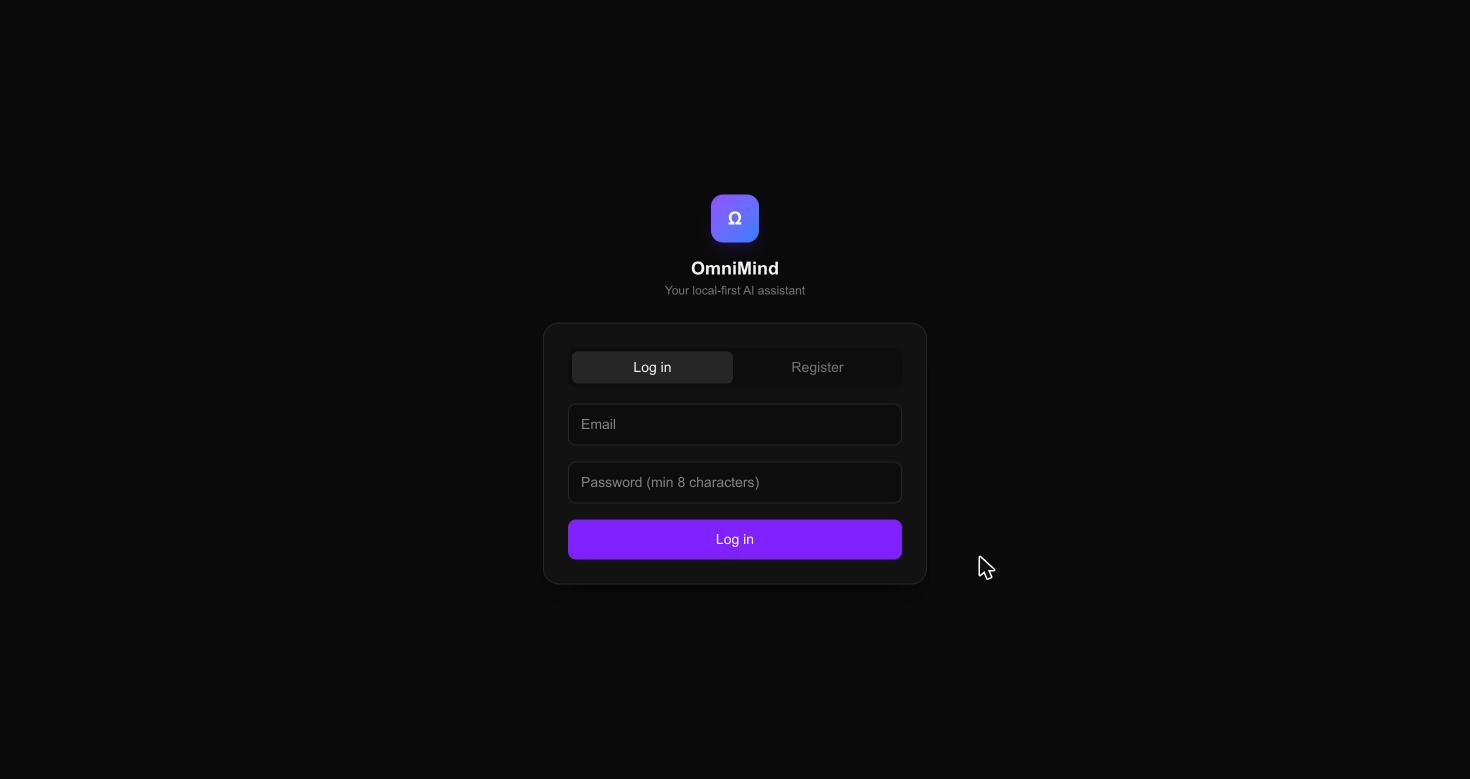
Email/password auth issuing a short-lived JWT carrying the user's organization and role as claims — the same claims every role-gated endpoint checks server-side.
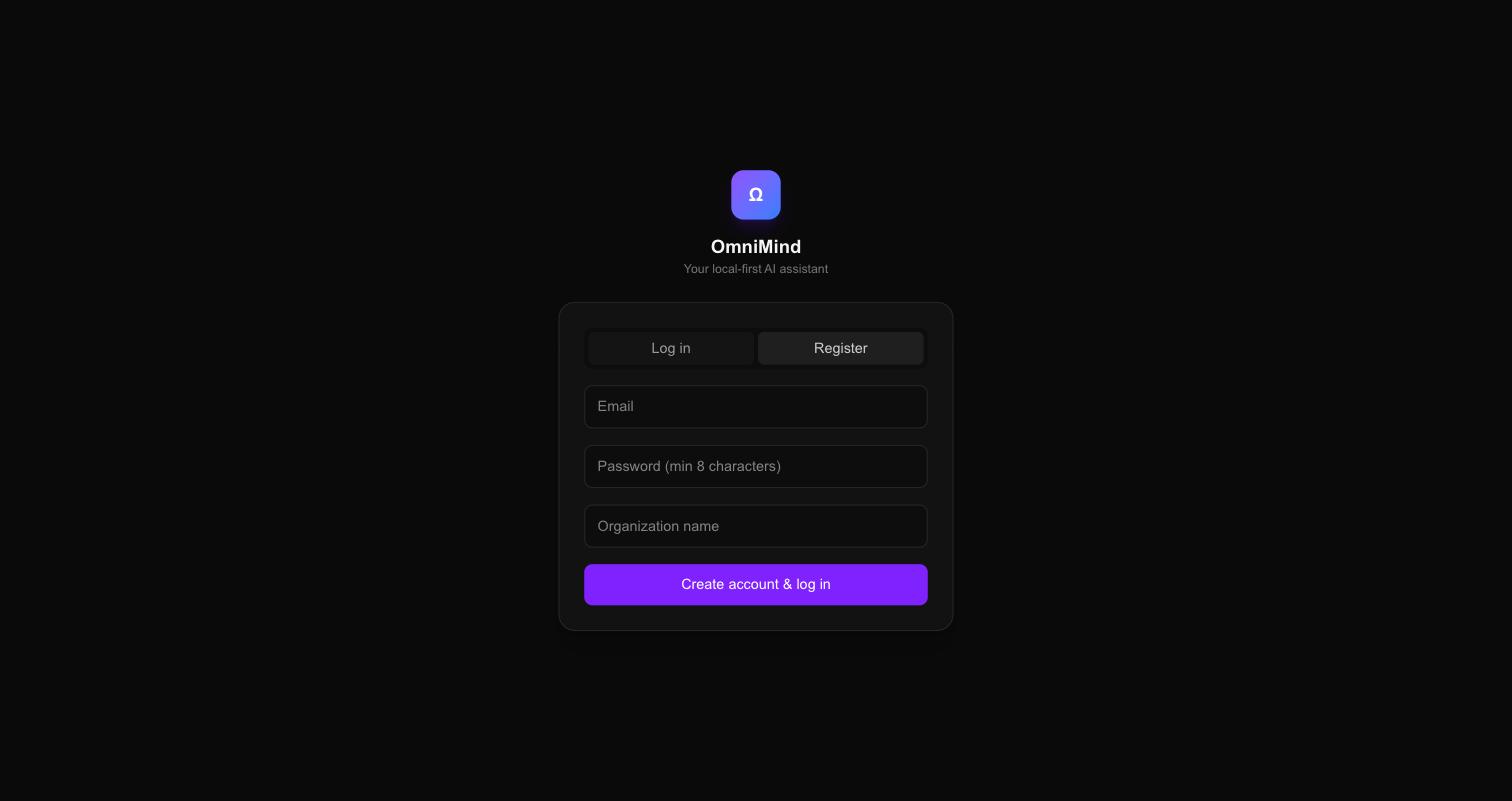
Registering creates a brand-new organization with the registering user as its
owner — the seed of that org's tenant. Every subsequent teammate joins this
same organization via invite, shown further down.
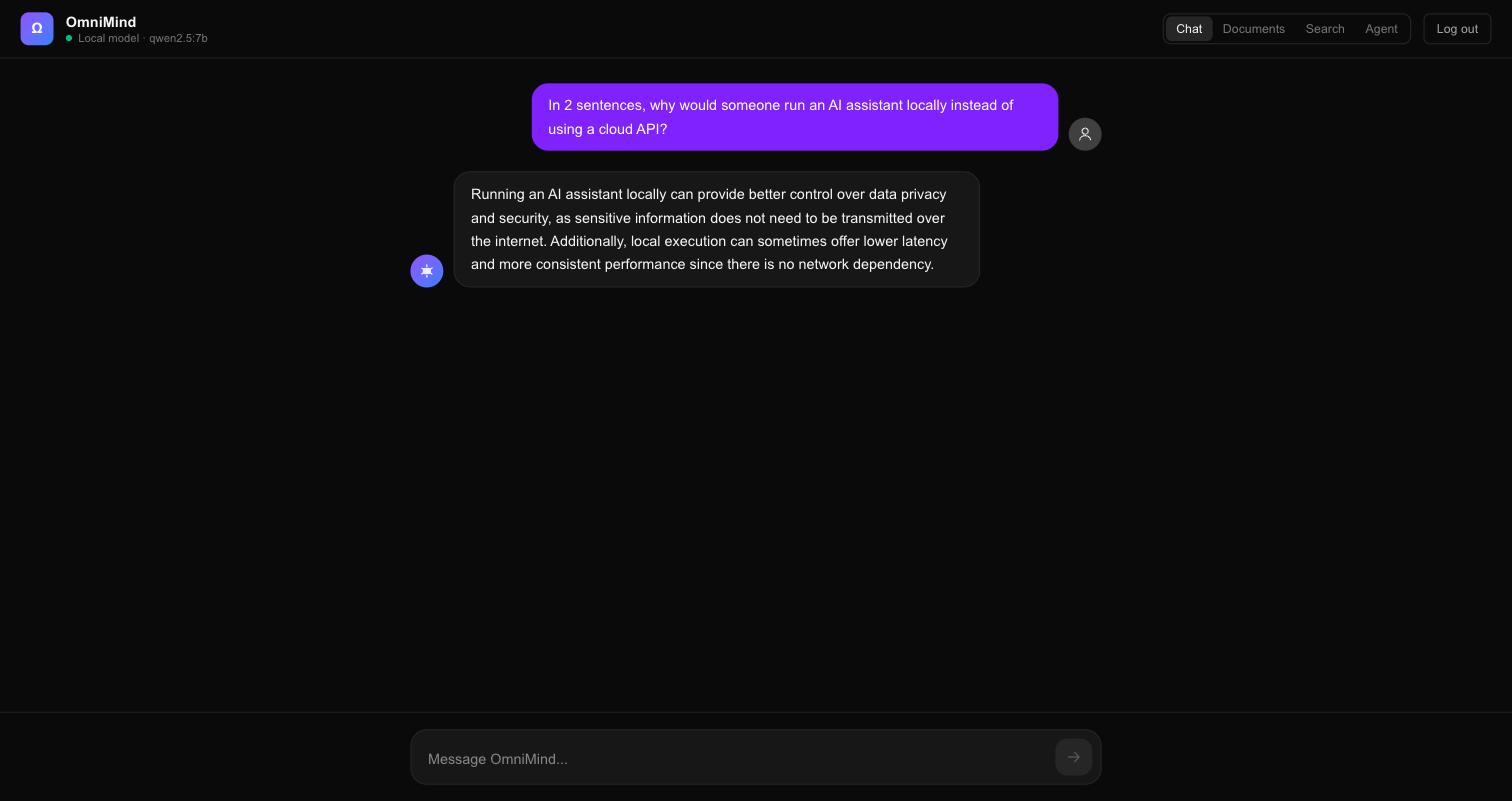
A real question answered by the local model, token-streamed over Server-Sent Events —
the exact model named in the header (qwen2.5:7b) generated this response on
this machine.
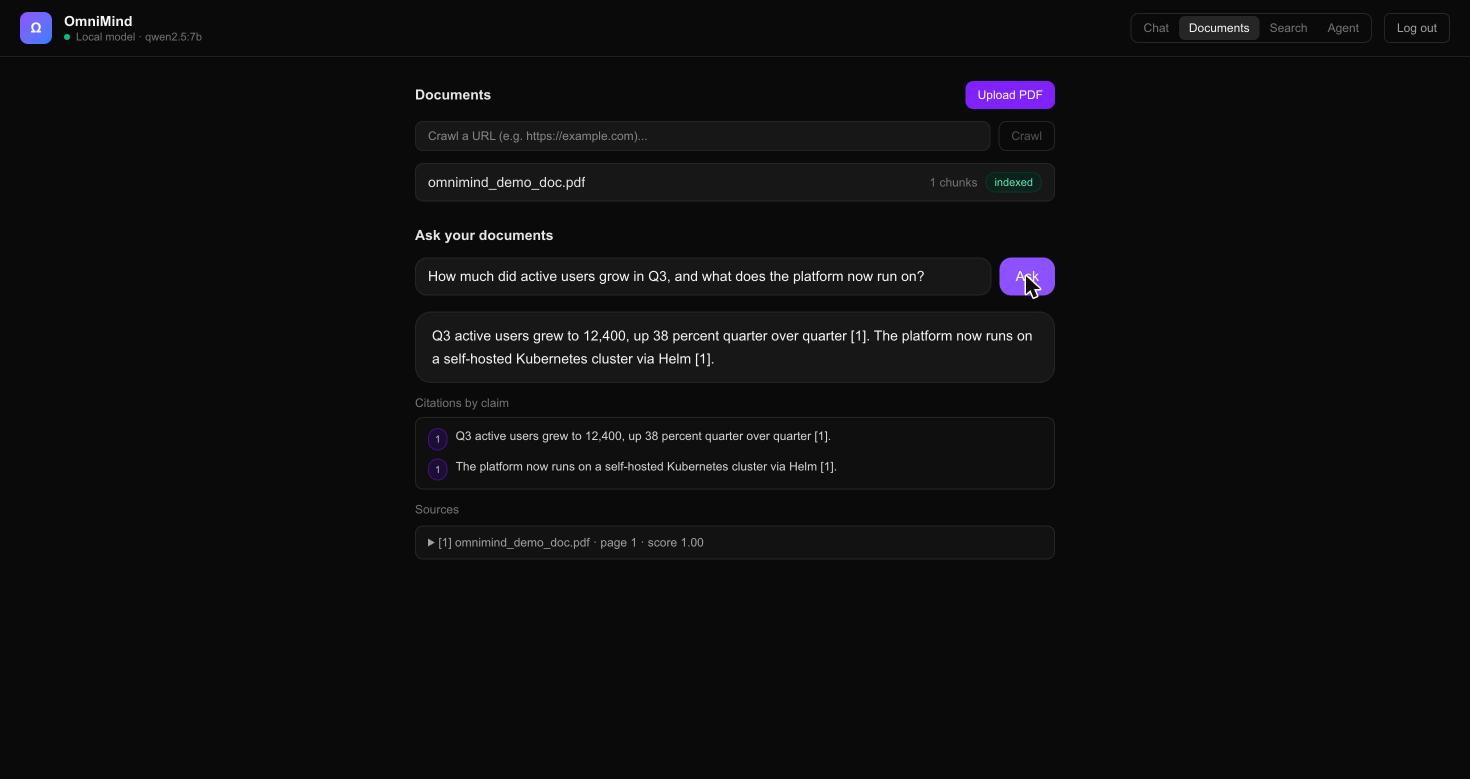
A PDF was uploaded, chunked, embedded, and indexed — this answer is grounded entirely in that document, with a per-claim citation resolving back to the exact page and a real reranker relevance score.
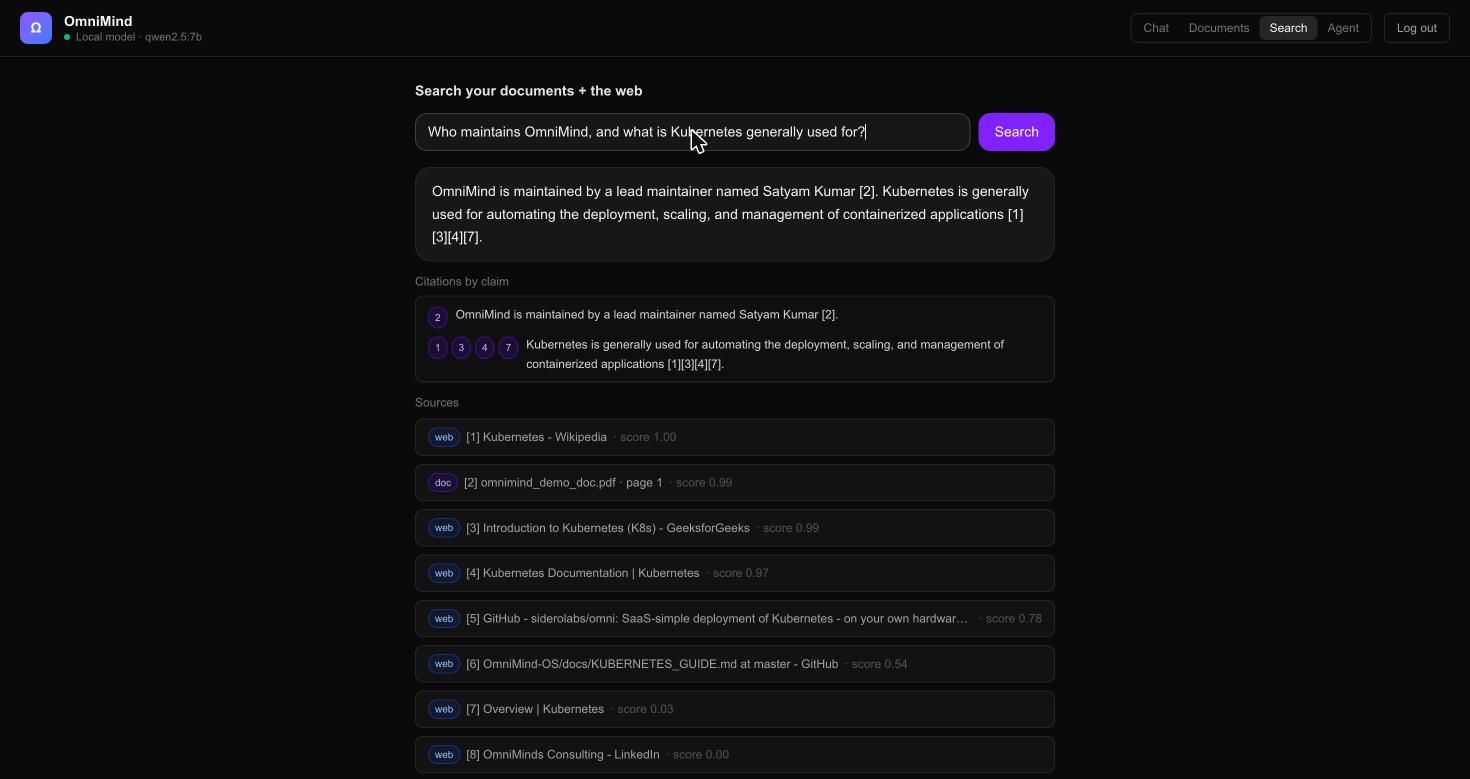
One answer, two source kinds: a fact from the uploaded document sits alongside real, live results from a self-hosted web search — fused by reciprocal rank fusion and re-ranked together, not just concatenated.
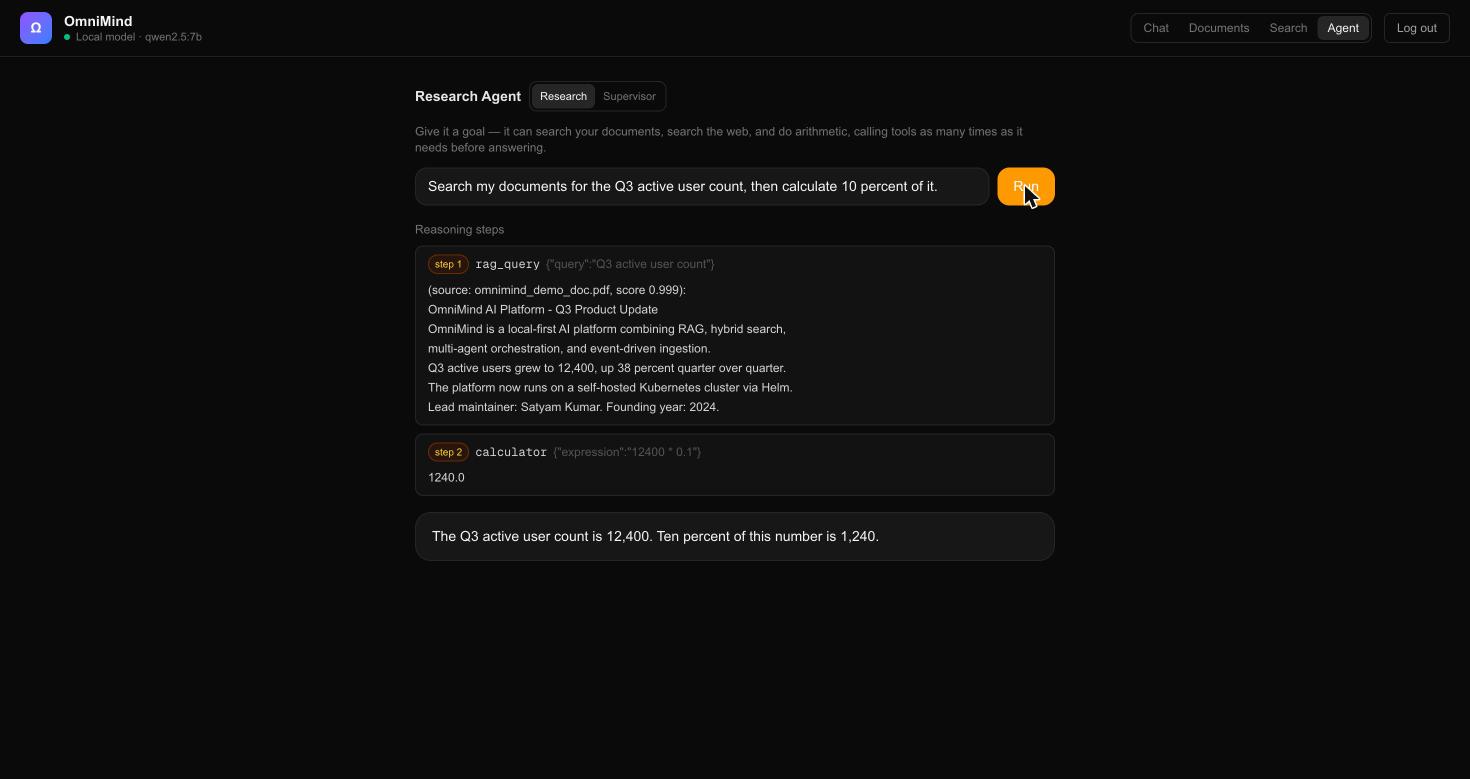
Given a goal, the agent decided on its own to search the document first, then pipe the retrieved number into a calculator tool — every step logged and shown, not hidden behind a single black-box response.
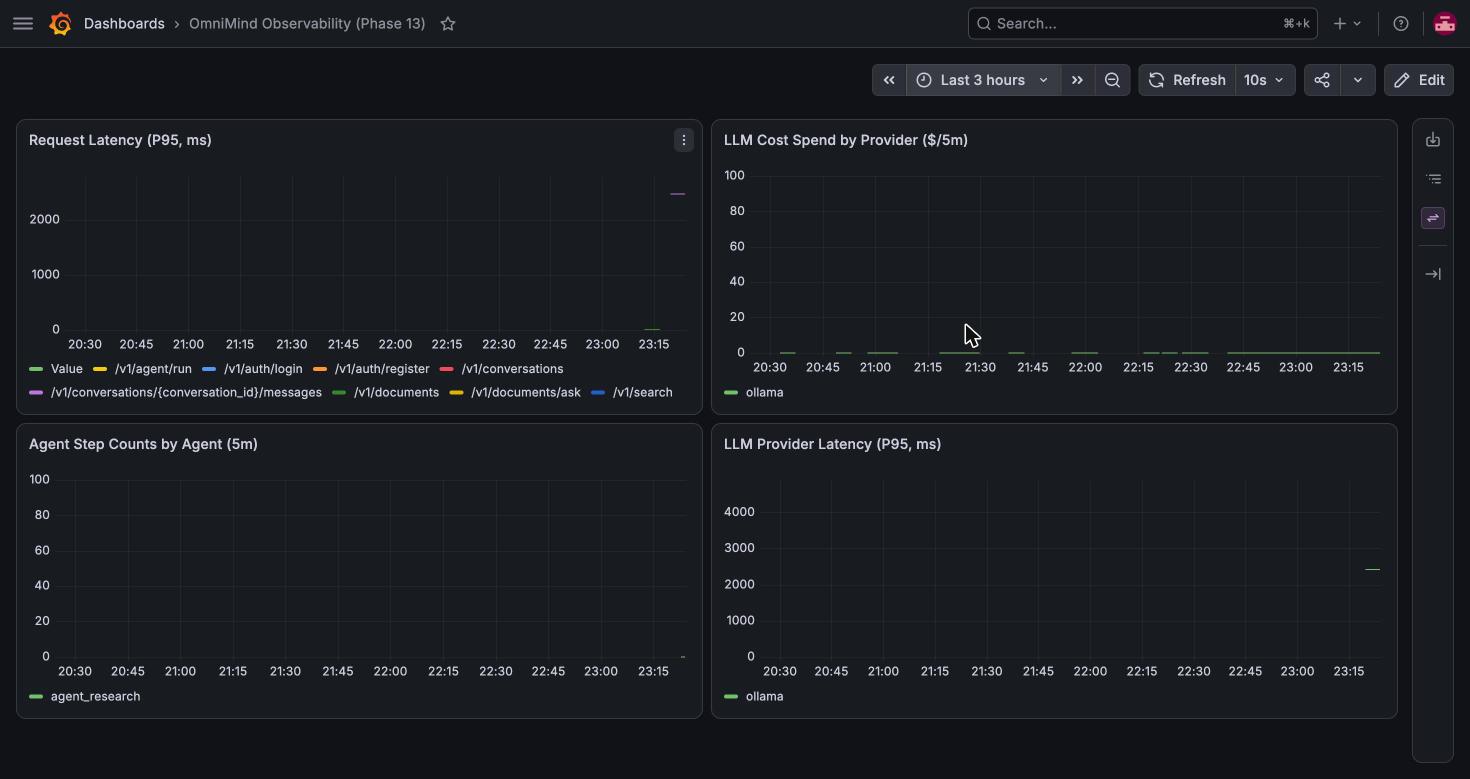
Request latency, LLM cost, and per-agent step counts, scraped straight out of the running API and rendered live — the same traffic from every screen above is what produced this graph.
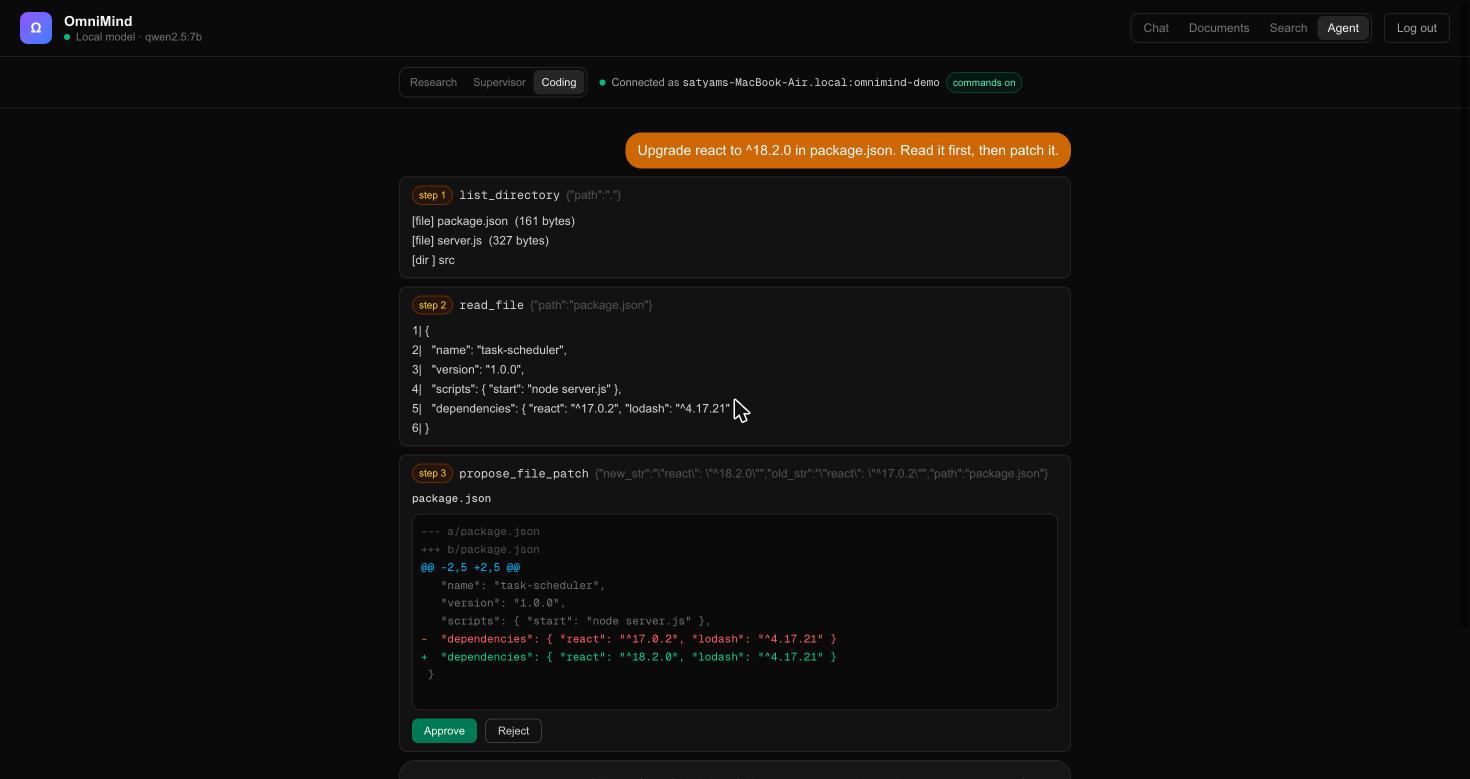
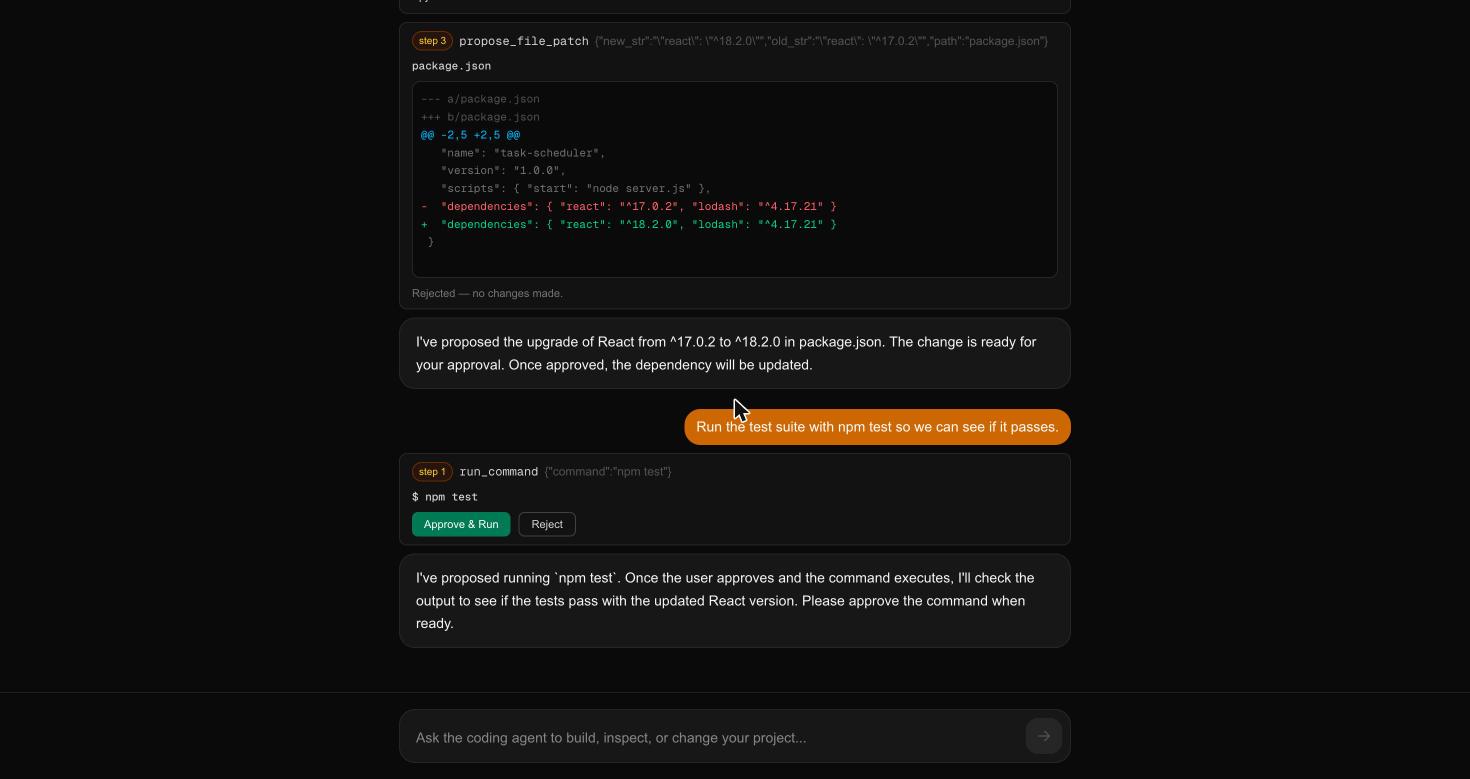
A local companion process connects a project on your own laptop over an outbound WebSocket, so nothing has to be exposed. The agent reads and searches that project, proposes surgical patches and commands — and nothing touches disk until you approve it. The security boundary is enforced on your machine, not on the server.

The agent listed the project, read package.json line-numbered, and proposed
replacing one exact snippet. Only the react line changes; formatting and every
other dependency survive byte-for-byte. Rewriting whole files is refused outright, because a
model regenerating a file it was only asked to edit is how formatting gets destroyed.

Reject and the file is untouched — the transcript says so explicitly. Shell execution is opt-in per connection, needs a separate approval each time, and a denylist of catastrophic commands is re-checked on your own machine regardless of what the server decided.
The same agent drives a terminal client, omnimind-code, over the identical
API the browser uses — so a session started in one continues in the other. This is a real
transcript: one typed goal, and it ran the file, read the actual ReferenceError,
patched the cause, re-ran it, and stopped once the exit code was 0. Long-running commands
like npm start are started as background processes whose logs the agent can
read, which is what makes "run this project" work at all.
There's no dedicated "team management" screen yet — this is enforced entirely server-side. Here's the real, unedited API exchange: an owner invites a teammate into the same organization, and that teammate's role is genuinely checked before every gated action.